Built on an idea.
Evolved into an approach.

Ohemaa Green Housing (OGH) began with a simple ambition: to rethink how homes could be built.
What started with a focus on new approaches to construction has evolved into a broader vision for residential development — one that brings together architecture, responsible material thinking, climate-conscious design and quality of life.
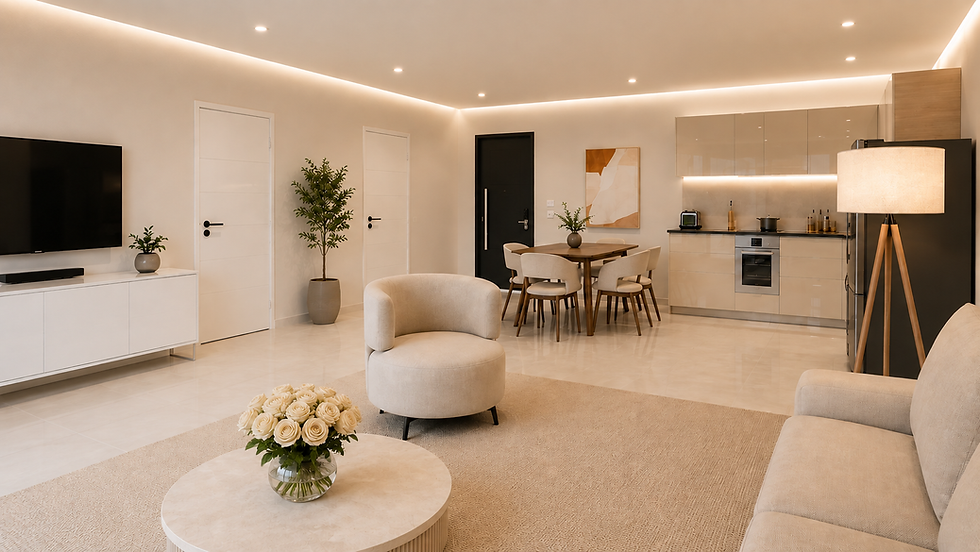
Today, OGH creates contemporary homes in Ghana shaped not only by how they are built, but by how they are meant to be lived in.
WHERE WE STARTED
Rethinking how homes could be built.
Ohemaa Green Housing began with a fundamental question: could we build homes differently?
Our early work challenged conventional construction by exploring circular material systems, alternative building methods and new ways to use resources more intelligently. The aim was never innovation for its own sake, but to rethink how durable, responsible housing could be created for Ghana.
What began as a question of materials and construction soon opened a much bigger conversation about what a home should be.
"Construction was the starting point.The ambition was always bigger."
SHAPED ACROSS CONTINENTS
Different influences. One residential approach.
Germany
Where the idea began to take shape. An engineering-led environment helped form the way OGH approaches systems, performance, durability and the discipline behind how things are built.
Latin America
Where material innovation expanded the possibilities. Partnerships and construction experience in the region introduced OGH to circular material systems, adaptable building methods and new ways of thinking about resource use.

Ghana
Where the approach becomes place-specific. Ghana brings together engineering thinking, material innovation, climate-conscious design and an understanding of how people live — shaping homes rooted in local context and created to meet contemporary expectations.
The journey crossed continents. The purpose remained rooted in Ghana.
WHAT WE LEARNED
A home is more than the material it is built from.

Ohemaa Green Housing’s perspective evolved from material and construction innovation into a broader understanding of what makes a home truly work. Performance and responsible material use remain fundamental, but they are only part of the experience. Natural light, proportion, climate, landscape, comfort and functionality all shape how a home feels and how it is lived in every day.
The question became bigger: not only how should we build, but how should people live?
WHAT OGH STANDS FOR TODAY
Thoughtful by design.
Responsible by nature.
DESIGN-LED
CLIMATE-CONSCIOUS
Architecture and quality of life come first. Every space is considered around how people move, live and experience their home.
Homes respond to Ghana’s climate, natural light and patterns of living — creating spaces that feel open, comfortable and connected to their surroundings.
ROOTED IN PLACE
MATERIAL INTELLIGENCE
Materials are selected with performance, durability, responsibility and long-term value in mind, balancing technical function with architectural quality.
Each development responds to its setting rather than following a fixed formula, allowing architecture, landscape and local context to shape the experience of home.
ROOTED IN GHANA
Designed with Ghana in mind.

Ghana is not simply where Ohemaa Green Housing operates — it is the context that shapes how we think about residential development. We design in response to climate, landscape and the way people live today, combining local understanding with a contemporary design perspective.
Our ambition is not to import a fixed model of living, but to contribute to a modern residential identity that feels distinctly at home in Ghana.
A modern residential identity shaped by Ghana's climate, landscape, and lifestyle needs.
THE PEOPLE BEHIND OGH
Founded with purpose. Built through collaboration.
OGH is supported by a multidisciplinary international team and specialist partners across Ghana, Europe and Latin America. Together, the wider network brings experience across residential development, real estate finance and management, construction, civil engineering, material systems, entrepreneurship and project execution.